By Elizabeth Young
Complex regional pain syndrome is REAL: I only wish I had never heard of it.
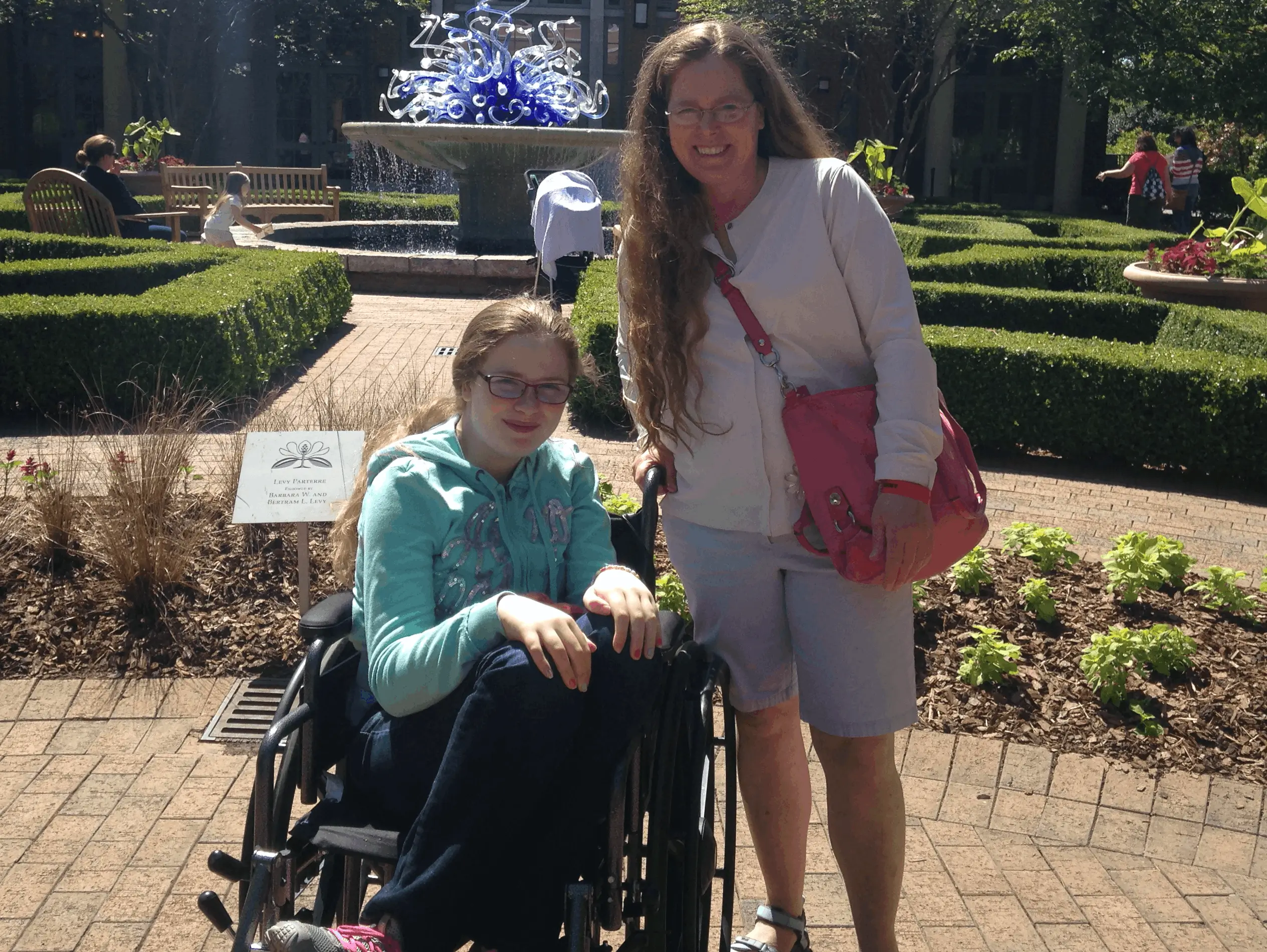
I am a parent and caregiver of a disabled adult who has suffered from Complex Regional Pain Syndrome (CRPS) for 12 years.
The syndrome began with a seemingly minor injury. At age 11, my daughter sprained her ankle in a basketball game. That sprain never got better. It developed into CRPS, a rare, severely disabling, neuroinflammatory condition that affects the autonomic nervous system.
My daughter has seen many physicians, tried multiple medications, and therapies. We make the most of any day that she feels well enough to do things that she enjoys. But it isn’t easy.
The Isolation
For those who have been diagnosed with a serious — though understood — medical condition, there is usually support from friends and family. That support helps the patients and caregivers through their roughest days. But for those diagnosed with rare, unknown, misunderstood, and mostly invisible disorders, like CRPS, there is little support.
I believe there are several reasons for this. CRPS manifests differently in different people. As its name implies, people with this condition endure constant pain. Although some patients do get better — even going into remission — in many patients, the condition becomes chronic, progressing in severity over time. For those, like my daughter, whose bodies do not recover, they are not believed. They hear that they just “couldn’t remain sick for all these years.” They are blamed as if they did something wrong or are simply “not trying enough to get better.” They are questioned, asked if they shouldn’t go to a different doctor or try another treatment.
Unfortunately, some chronic, progressive, and debilitating cases of CRPS do not improve, they do not get better. This is the reality that is hard for people to accept. It has meant so much to us that we have been supported by my family.
However, my daughter has been abandoned by other family members (not mine) and even some friends, just because she’s sick. I was told by those who used to be close to me that my daughter “didn’t explain the pain to them enough, when she was 14” … that they “needed to hear it from her.” I was told she “looked fine” or questioned because “she could do that activity the day before.” I have heard many terrible, hurtful things from so many people who should have been there to support us.
As an invisible disorder, patients with CRPS may seem fine, but that is far from the truth. There is an unknown, and unseen, other side to that person’s life. People with CRPS pay for any activity they do. Being active one day can result in many days of pain flares, being unable to move, or even being bedridden.
For every patient, CRPS is different, but there are similar manifestations. People with CRPS never know what each day will bring. They can have good and bad days. There are days when they suffer to the point that even a vibration, a slight touch, or noise causes pain. Can you imagine living and not being able to have people talk to you because it hurts too much? Many days, even a car ride is too painful for my daughter.
The Disbelief
When CRPS first manifested, my daughter’s physicians mistreated her. She has medical PTSD because of this. Then she was accused of making up her pain by school administrators, classmates, and friends. In response, she said, “If you think I was going to make up a condition, don’t you think I’d make up something that people would believe?” When she was 12, she wished she could wear a cast so everyone would believe that what she had was real.
It is hard to look back and think of all that she went through, and what I went through as her parent. Her school nurse and principal didn’t believe the reality of her condition. They felt they knew better than the CRPS specialists at the top Children’s Hospitals who were treating my daughter. Even with all the doctors’ files proving the CRPS diagnosis, they continued to think that they knew better. They refused to believe a small suffering child.
After her physicians wrote letters to the school requesting accommodations, like providing a tutor so she could keep up her school work during hospitalizations, the school refused to believe the diagnosis or comply with their requests. Instead, they called the Department of Child and Family Services (DCFS ) and started an Munchausen by Proxy investigation against me.
Shame on them for what they put us through! The US Office of Civil Rights helped us and filed a complaint against that school. Yet still, the school punished my daughter for being sick. The nurse questioned my daughter’s pain every day. She refused to give her prescribed medications.
The attitude of the school personnel infected my daughter’s classmates. They made fun and — reflecting the adults’ modelling — did not believe my daughter’s pain was real. My poor daughter lived a nightmare inside that school all while trying to deal with being diagnosed with one of the most painful conditions that exists. I wish I had taken her out of that school. Even as she had to be on ‘hospital homebound’ as she received treatments and missed school, she pushed on. Despite the lack of support from everyone, she succeeded, graduating from that school. Although getting the accommodations she needed was never easy, she graduated from high school.
Sadly, I’m not the only parent of a patient with CRPS, EDS, and other rare conditions that have been investigated. In fact, many of the parents I know who have a child with CRPS have been through this. From what these parents say, my daughter and I were lucky. We eventually found physicians who believed us. Many other families suffer at the hands of physicians who misdiagnose, mistreat, and disbelieve the reality of CRPS pain. Instead of learning more or getting help, these physicians blame the parents. So many families have suffered, and tragically, lives have been lost because of the mistreatment of these rare diseases in children and adults. It is time for this to stop.
Today
At this point, the unrelenting pain is part of her. Even though my daughter has a great medical team — for 12 years she has seen the top doctors all over the country for this condition — chronic CRPS doesn’t end. She doesn’t look sick. She looks like a beautiful young woman attending a college class or having fun with family or friends. However, her leg still swells even 12 years after the sprain. Her diagnosis of chronic, progressive, and disabling, cold CRPS, means that during a pain flare, her whole foot becomes ice cold– a cold that nothing stops, that slowly progresses up her leg with searing, debilitating pain.
Like other patients with CRPS, she has a long list of daily medications. She receives weekly IVIG infusions as well. Every few months, since she was 12, she has received ketamine infusions. Without these treatments, she would be bedridden in pain and unable to function. We pay out-of-pocket and travel many miles for her infusions. For years, our home away from home was the Ronald McDonald House. We received so much support there. It was the only way we were able to continue her treatments. Now that she’s aged out of the Ronald McDonald House, we have to pay for hotels as well. But what we miss most is the support we had there: being able to walk through those doors after her treatments and being around people who just “got it.” They understood she just needed to recover, and that I was there to support her. They were like a second family.
Beyond medications, she has done physical therapy, CBT, aqua therapy, Tens unit — so many therapies for years. Still, she experiences constant nerve pain that never goes away. While other peers her age have now graduated from college, are working, maybe even starting a family, it is all she can do to attend one class a week. Still, that in itself is truly a miracle.
It is hard as a parent and caretaker to watch all the suffering, treatments, and procedures that my daughter has to go through, but what is equally as hard is the judgment she receives from people. I have learned to focus on living my best life daily and supporting my daughter whose pain is real. Those who have judged her so harshly are not worth my time. But, I see the effect this judgment has had on her over so many years while she struggles through weekly treatments and therapies just trying to exist. I know she’s not alone and others with CRPS are treated this way.
Here is my wish list:
I wish that people
- Understood that CRPS is real
- Believed that CRPS is not caused by people “not pushing through the pain”
- Accepted that CRPS can’t be cured by diet or exercise
- Gave credence to the fact that parents do not invent or “make up” CRPS
- Understood that CRPS in children does not occur because parents are coddling them and that the pain is really that bad
When no one else understands what you are experiencing, you become limited to those that do. It was through a secret Facebook group that I met a Society of Underground Moms who got me through the worst. They were there for me night or day, during all my daughter’s treatments, or when I just needed someone to talk to. Without this group, I don’t think things would be the same for us.
Yet, I also learned that these moms had children who were sick. Many beautiful young people have lost their lives to CRPS, EDS, and other comorbid conditions. Many of them have been mistreated and didn’t receive the care they needed. I think of them every day.
As my daughter and I get older, I wish for a future where she is no longer judged. I hope that, by raising awareness of CRPS, empathy and connection will replace judgment and isolation for all CRPS patients.